The Spring 2026 AI for Education Fellows closed the cohort with six open-source builds. The projects range from personalized learning environments to a program that helps students deliver AI solutions for small businesses.
1. PersonaLM: learn complex topics through favorite characters
Built by Jasjeev Singh
Jasjeev, an educational-content creator, explored several ideas before landing on PersonaLM. Inspired by wanting a better education experience for his neurodivergent brother, he built a platform where students can create custom characters around their own learning materials.
Fifty-two percent of K-12 students report that they are not engaged in their learning. PersonaLM is an attempt to meet learners where they are with more personalized support.
In 30 days, PersonaLM reached more than 5 million organic views, grew a waitlist to more than 1,000 people, and began its first beta pilot to understand how people create and interact with new characters.
2. Whetstone: a professional-certificate tutor
Built by Xiangan He
Whetstone is an immersive tutoring environment for professionals preparing for Anthropic’s Claude Code Architect exam, where a failed attempt brings a six-month cooldown. Xiangan also tested the product for CISSP cybersecurity certification. Seventy-two percent of people fail certifications such as the OSCP on their first try, even as certifications become requirements for more careers.
During the fellowship, he ran two paid pilots for the Claude Code Architect tutor - one with a major developer agency and another with a consulting firm - plus a CISSP pilot with Boston University students.
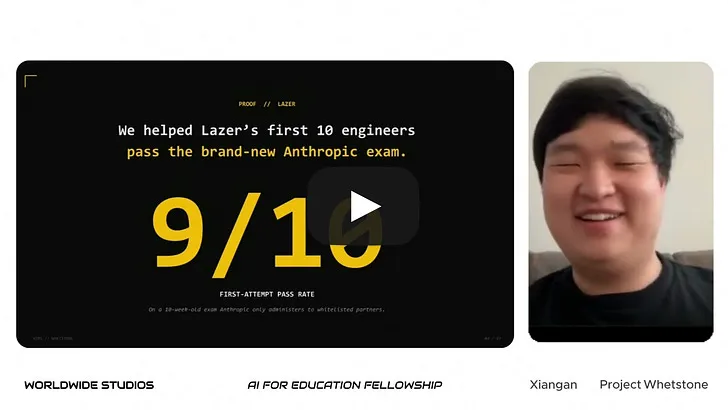
Watch the Whetstone demo or connect with Xiangan on LinkedIn.
3. Sarto: students building AI solutions for small businesses
Built by Ryan Leong
Ryan took a leave of absence from college because it did not offer a way to keep up with the latest in AI. He saw a gap between the experience students want and the work businesses need done. Sarto connects aspiring student builders with small businesses that need AI-native solutions, from WhatsApp customer-support agents to back-office automation.
He completed a paid real-estate automation pilot, spoke with several local businesses, and worked with five students on solutions for those businesses.
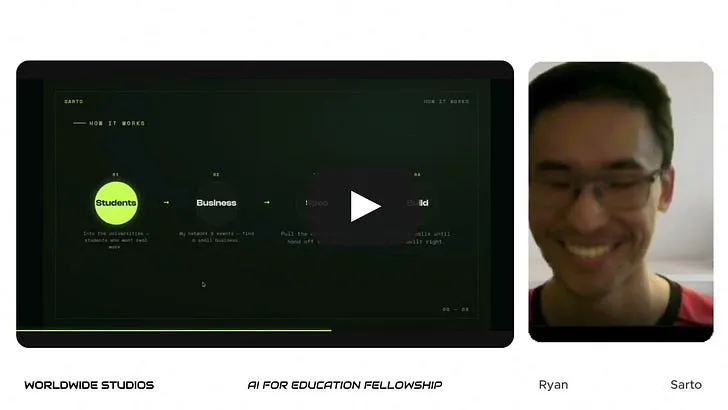
View the Sarto student demos or watch the project demo.
4. AEO Grader: improve discovery in the agentic era
Built by Feodor
As people increasingly ask AI systems for recommendations, businesses need to understand answer-engine optimization (AEO) alongside conventional SEO. Feodor saw businesses in Russia falling behind in AI adoption and best practices, and built AEO Grader to help organizations understand and improve how their websites are represented in AI-assisted search.
With Jay and Harsh, he tested an early teaching-platform version and interviewed dozens of businesses about their AEO pain points.
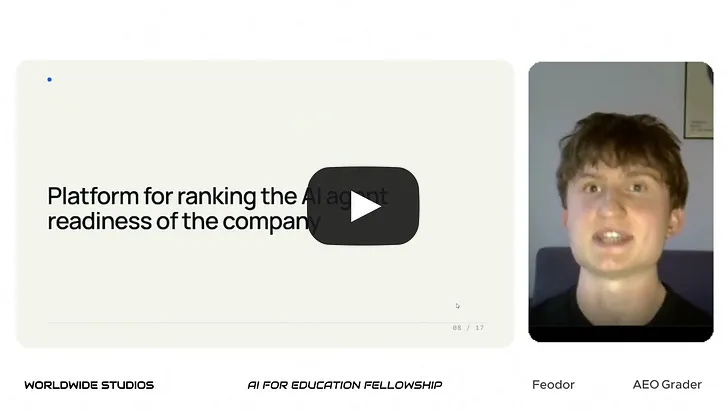
View the AEO Grader repository or watch the project demo.
5. ThinkHigher: scenario-based practice for aspiring data analysts
Built by Joseph Ching, Lilian Gong, and Morgan Hough
ThinkHigher gives students a virtual, team-based environment to practice data-analyst work and the asynchronous communication that goes with it. The team wants to make hiring and skill assessment more contextual than a linear application process, where hundreds of one-click applications are filtered with little feedback.
They piloted with two student consulting clubs and validated the scenarios with industry experts.
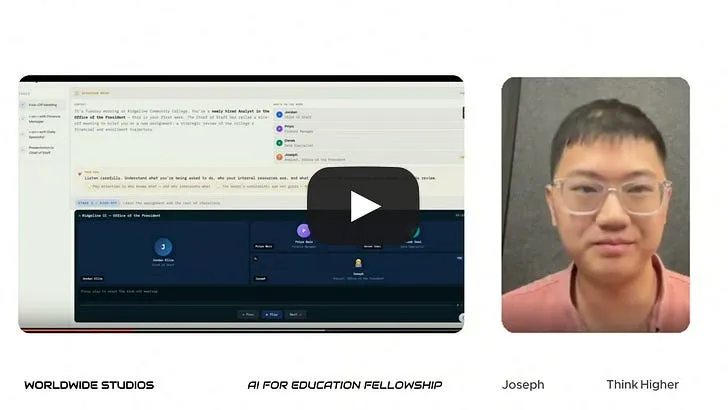
View the ThinkHigher repository or watch the project demo.
6. Strata Mundo: personalized middle-school math games
Built by Barbara Jauregui Wurst
Barbara built Strata Mundo to help learners understand math through games rather than repetition alone. The system gauges a learner’s current understanding and uses games to grow both skill and motivation. Her experience with a brother who did not receive the support he needed in school, and now runs a successful garage, motivated the work.
She piloted the project at her Acton Academy, ran a workshop where middle-school students designed their own games, and built a pipeline of 26 interested schools and owners to explore a cooperative model.
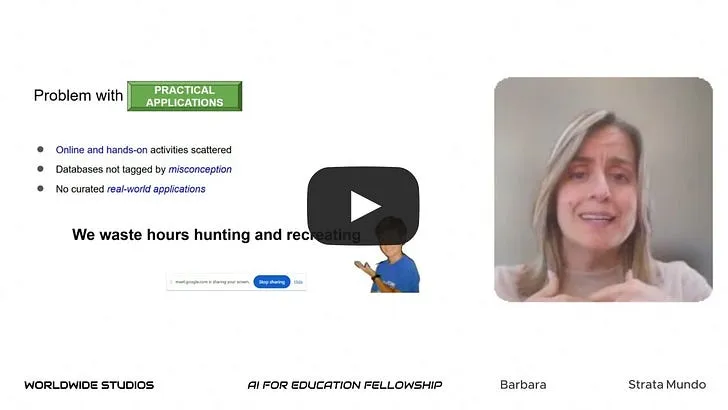
Watch the Strata Mundo demo or connect with Barbara on LinkedIn.
More builds from the cohort
Other fellows also shipped interactive curriculum-management systems for large higher-education lectures, project-based learning guides, a middle-school math tutor with paying customers, and an online math tutor that reached a paid pilot.
Congratulations to everyone who built in public this spring. Follow Worldwide Studios for the next round of demos and fellowship updates.