Dig Deep,
Level Up
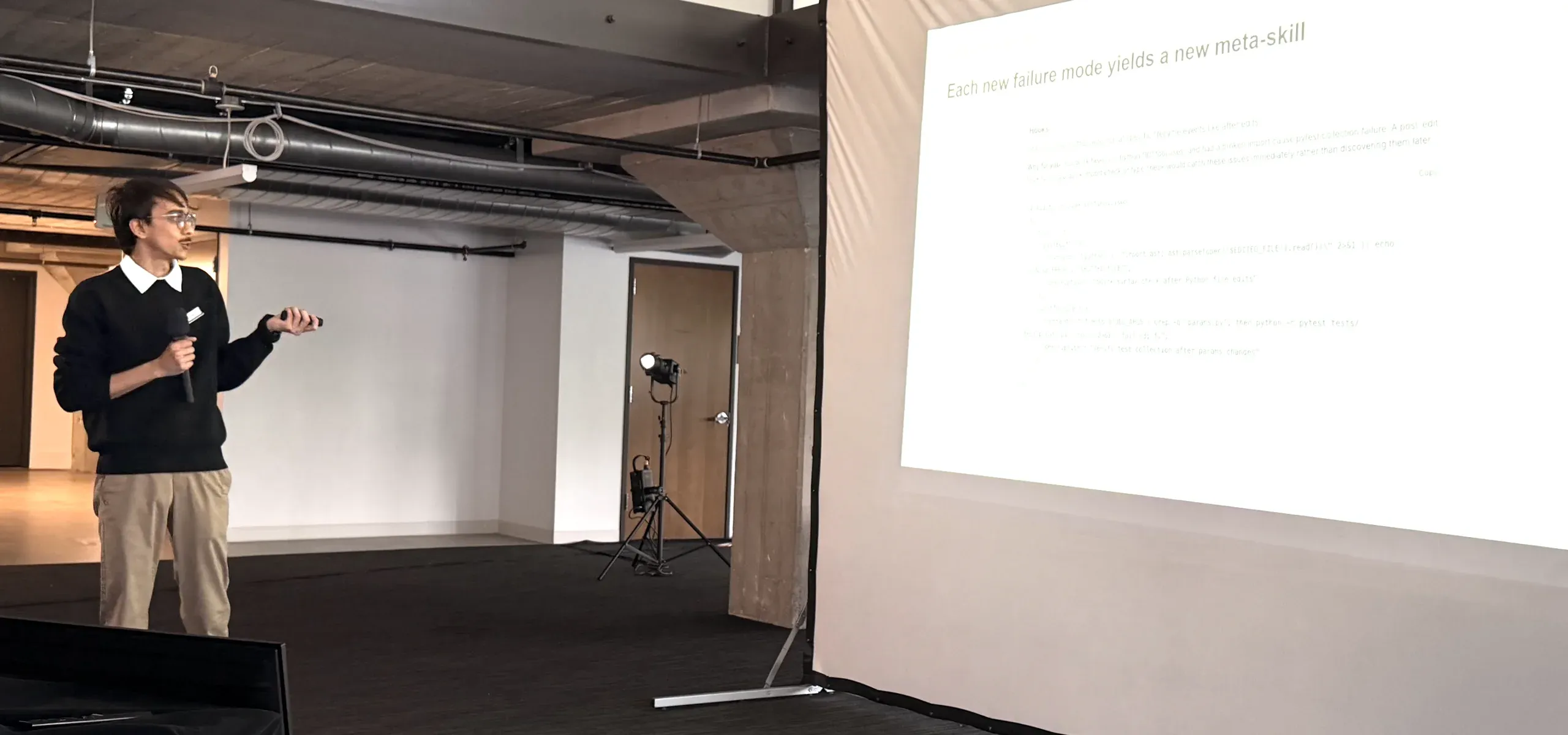
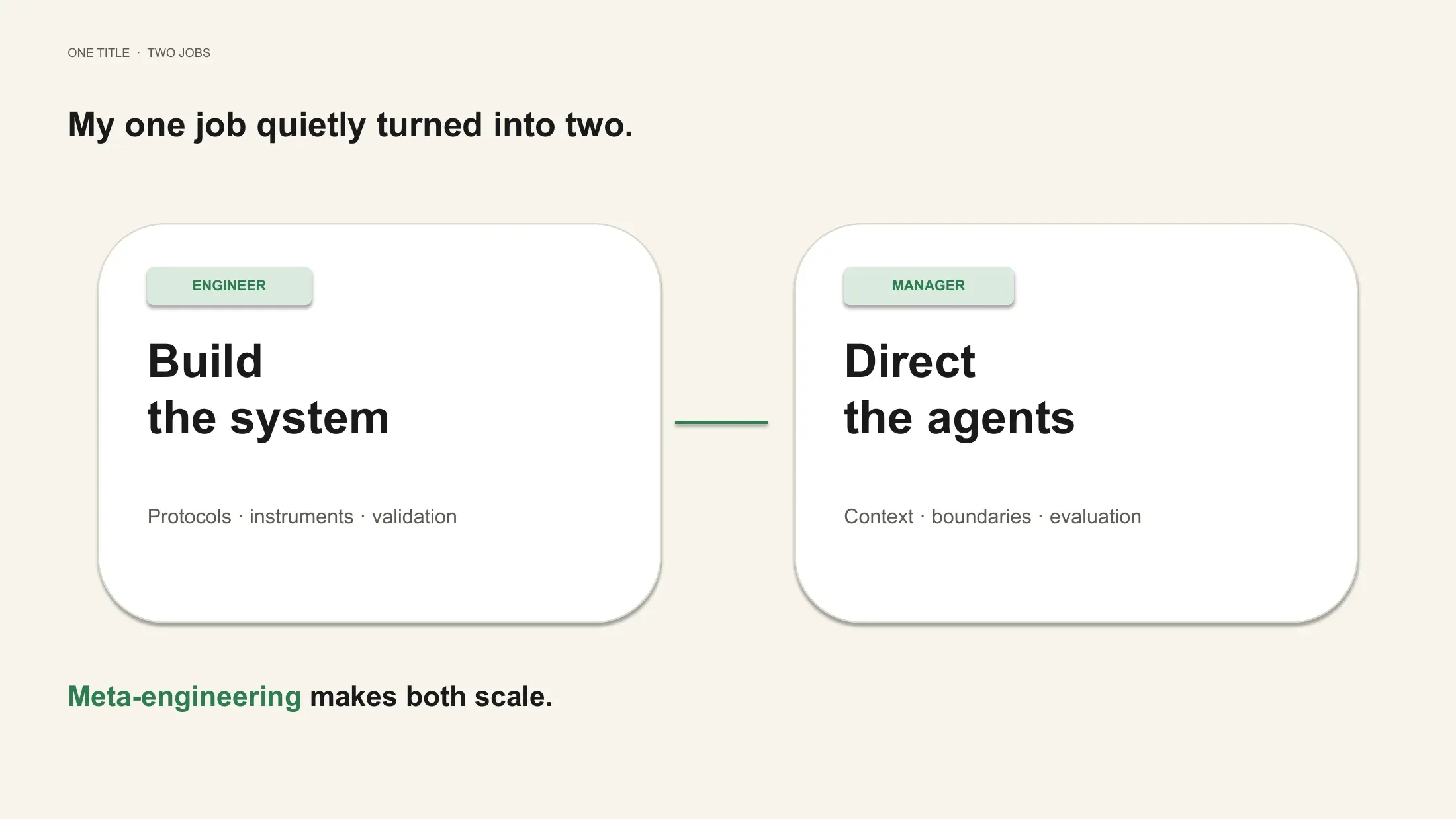
Mohammad Ahsan Fuzail opened with a quiet confession: since the hackathon, his job has split in two. Same title — Senior Lab Automation Engineer at Lila Sciences — but an entire digital squad now lives in his terminal.
One half is still engineering: protocols, instruments, validation. The other half is management: giving agents context, boundaries, and evaluation. What lets both scale is meta-engineering — treating every failure as material for the system that prevents it next time.
That works because failure gets cheap. “I would rather meet a failure in software than at the bench.” He put a friction report from his own coding sessions on screen — wrong approaches, scope creep, flaky tooling — and read it as telemetry, not embarrassment.
Cheap failures become reusable infrastructure.
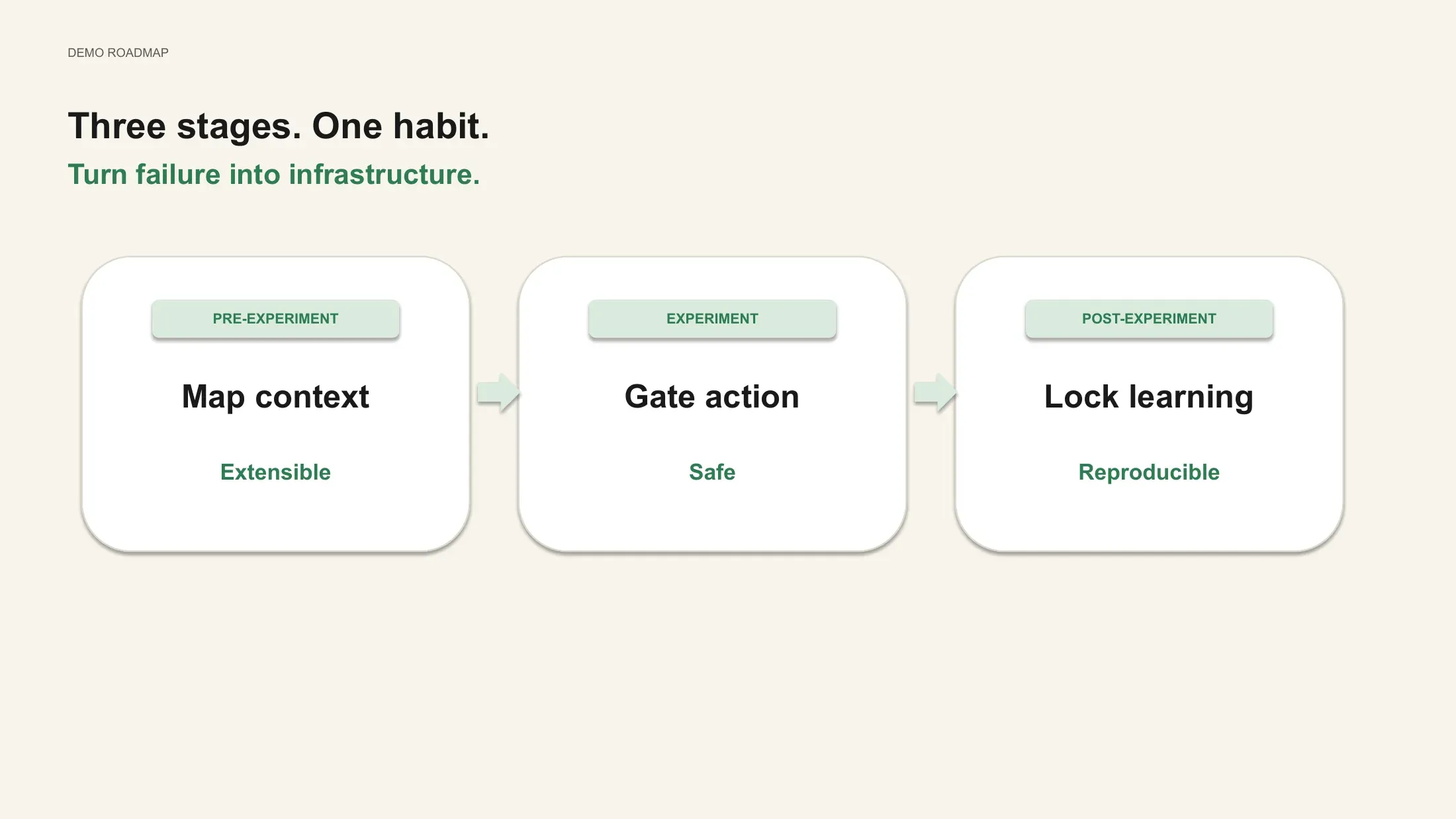
The habit runs in three stages. Before an experiment, map context: an agent that cannot see state should not extend it, so he builds a graph of the codebase and, on the hardware side, structured instrument state. During it, gate action, because some actions don’t come with an undo — a rule pack that denies git reset --hard in 15 milliseconds and explains why. After, lock in learning: each new failure mode becomes a hook or a skill that runs on its own next time.
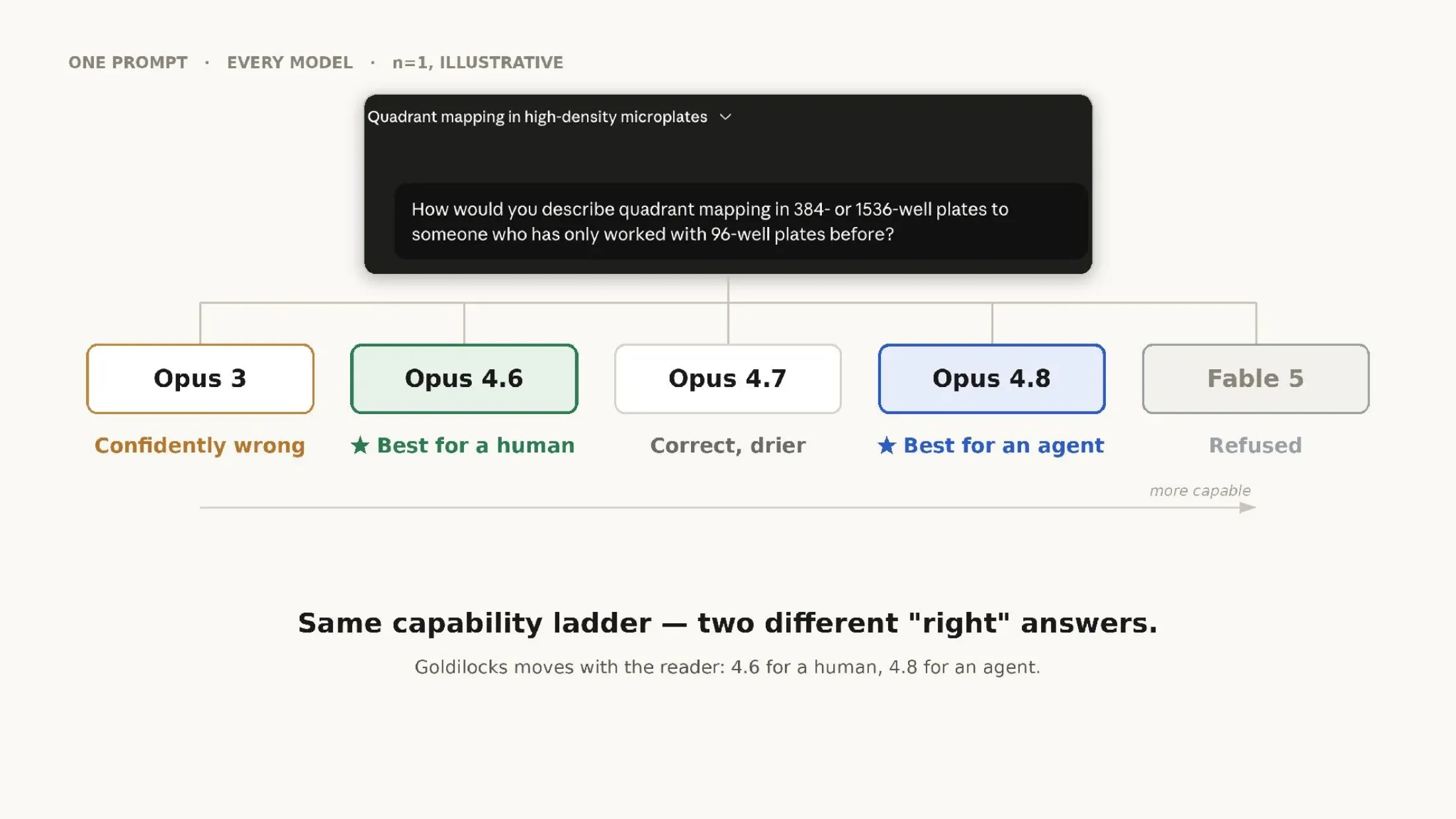
He also ran one prompt — explain quadrant mapping in 384-well plates — across five models, and the answers disagreed about what “right” meant. One read best for a human, another for an agent. Only one noticed that A1 → A2 → B1 → B2 is a convention, not a law; plenty of labs index the other way.
The payoff isn’t time saved, he argued. It’s time returned — enough to notice what automation usually crops out: Boston’s humidity, plate seal-and-peel chaos, known unknowns. His closing question: if agents give us back time, do we move faster or notice more? His answer so far — go deeper, hardware-first.
More from the summit
Two days in San Francisco with 125+ founders, scientists, engineers, and researchers. Talks, build sprints, and demos across AI, hardware, and science.